


Systematic performance marketing. Schedule a strategy meeting →

Most B2B projects do not fail on reach, they fail in the middle. Traffic is fine, click prices are acceptable, and the inbox fills with enquiries sales cannot use.
We build the whole route: from the research that starts long before first contact, through to the meeting your sales team actually wants. What we measure at the end is not the number of enquiries but the cost per won customer.


4.9 von 35+ reviews

In B2B, one person rarely buys. A group decides, made up of the specialist department, procurement, IT and management, and each of them has different questions. Months can pass between first research and the order, and during that time nobody fills in a form.
At the same time, attention in this market is as expensive as almost anywhere. The agency term in this field costs around 14 US dollars per click in paid search at an organic difficulty close to zero. Own analysis, data source Ahrefs, September 2026.
The order of work follows from that: qualification first, volume second. Reverse it and you buy expensive contacts with no need.
The decisive part of a B2B buying decision happens before anyone speaks to your sales team. Departments research, compare and put together a shortlist. Whoever is invisible at that stage is not on the list later.
Our work starts exactly there: at the problem terms searched before any product name, at content that answers a real question, and at a page structure that a language model can understand and quote.
The most common conflict in B2B projects is the question of what counts as a good lead. Marketing reports success, sales says the contacts are useless, and from their own perspective both are right, because nobody defined the criteria together.
We settle that at the start: a shared definition of when a contact goes to sales, a binding response time, and a feedback loop reporting what became of each enquiry. Only with that feedback can you optimise for customers instead of for forms.









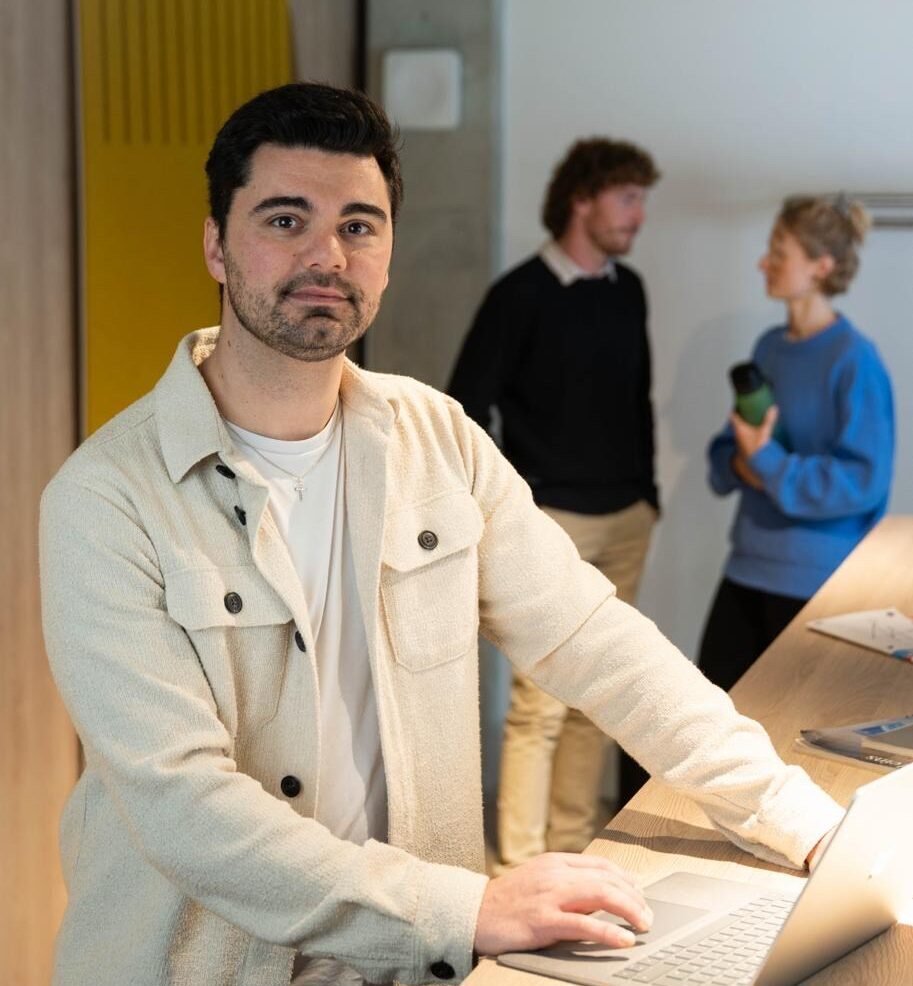
We establish who actually decides in your market, which role asks which question and at what point in the decision it is asked. That is where the topic list comes from, not from a keyword tool alone. Without this groundwork, content passes by the people who ultimately sign off the order.
Departments search for their problem, not for your product name. We occupy the research-phase terms organically and through paid search, with content that holds up professionally. How we build organic visibility is described by our SEO agency in Cologne.
A B2B landing page has a different job than a shop page. Within seconds it has to clarify whether the offer fits, and after that it has to filter out the enquiries that bring sales nothing. Three additional required fields lower the number of enquiries and raise the number of meetings, which in our projects is the single most effective change.
Paid campaigns in search and on LinkedIn, tightly steered by role, industry and company size. Not for reach, but for the few hundred people who are actually relevant to you. Delivery runs through our LinkedIn Ads agency together with the search team.
In B2B, months often pass between first contact and order. During that time you need content that helps rather than reminders that annoy. We build the route so the contact stays warm and sales can see when something moves.
We do not measure to the form, we measure to the won customer. That requires clean tracking that still works after the cookie banner and feedback from the CRM.
B2B lead generation rarely fails at a single discipline, it fails at the handovers. Between campaign and landing page, between landing page and CRM, between marketing and sales.
We take on the route as a whole, so no contact you already paid for gets lost along the way.
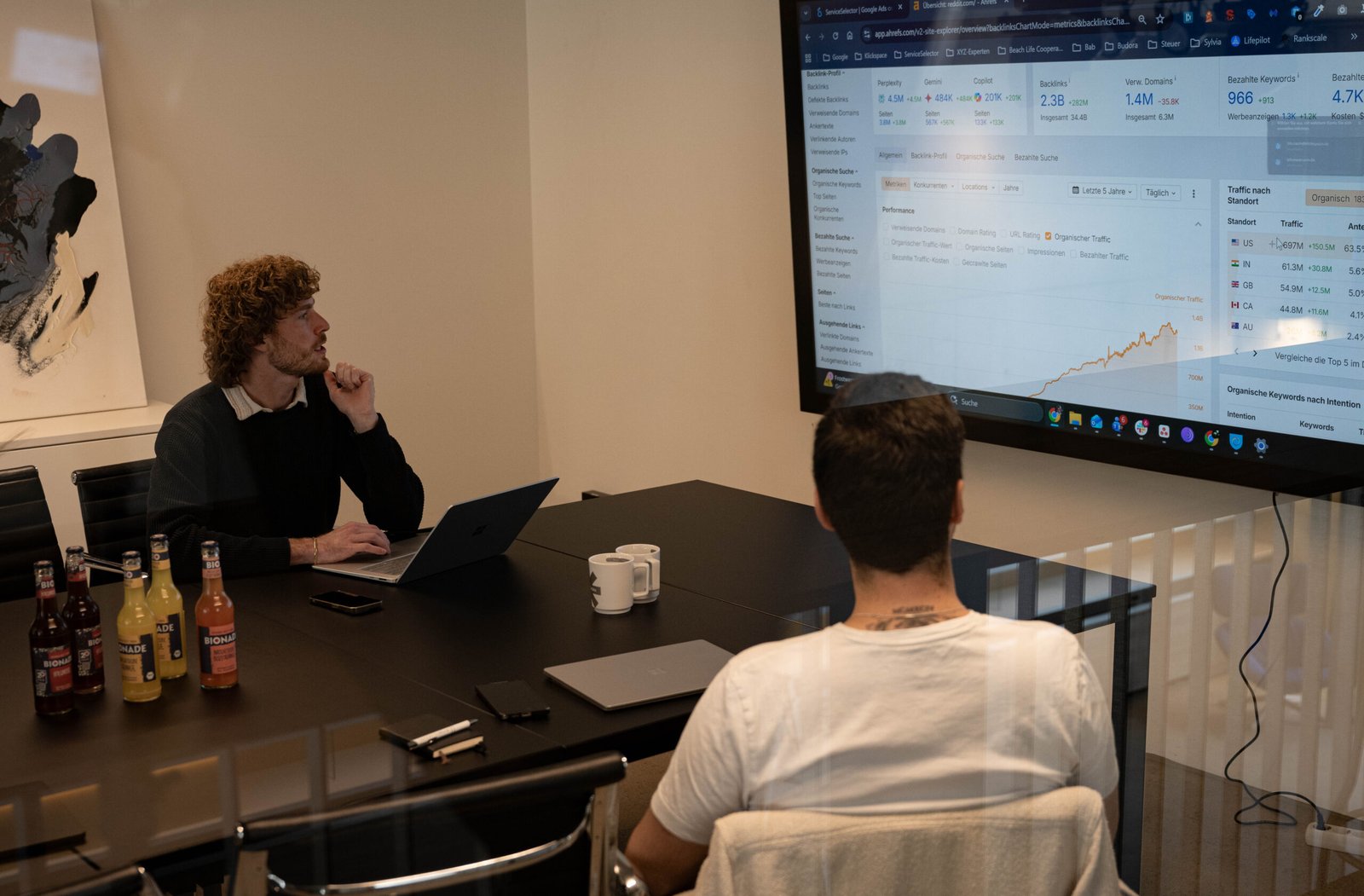
Each month you receive an overview that does not stop at clicks: enquiries per channel, share of qualified contacts, meetings and cost per won customer. Plus our view on what we suggest next and why.
If a channel does not carry in your market, we say so and switch it off instead of continuing it because it is in the contract.


Send us your starting point. We will work out what an enquiry costs you today, how many of them become orders and where along the route most of them are lost.
4.9 von 35+ reviews
B2B lead generation covers everything that turns anonymous prospects into named contacts with a recognisable need. Unlike consumer business, several people are involved, the decision takes longer, and the value of a single deal is considerably higher.
Through paid search usually within two to four weeks, once tracking and landing page are in place. Organically it takes six to nine months to reach solid results. In most projects we run both in parallel, because paid bridges the time the organic build needs.
That depends entirely on the market. In offers that need explaining, three-figure amounts per qualified enquiry are common. What matters is not that figure but the cost per won customer relative to deal value.
No. Bought contacts have no relationship with your brand, are often sold several times over and are frequently questionable in legal terms. We build your own demand, which takes longer and holds.
In most cases yes. Without a central record there is no feedback on which enquiry became an order, and without that feedback any marketing optimises for the number of forms rather than revenue. Which system it is matters less than whether it is used consistently.
Companies with a deal value in the four-figure range or above, an offer that needs explaining, and a sales team able to hold conversations. At very low deal values the cost per contact in this market is rarely justifiable.
Geben Sie Ihre E-Mail-Adresse ein, um exklusive Einblicke in die professionelle Welt des Marketings zu erhalten und über neue Lösungen, Trends und Angebote auf dem Laufenden zu bleiben.
Lassen Sie uns einen kurzen Termin vereinbaren, um zu besprechen, wie wir zusammenarbeiten und zum Erfolg Ihres Projekts oder Ihrer Idee beitragen können.

